
Bear History
The first organized bear club in Europe was founded in November 1984 in Cologne, Germany. Not long afterward, the group often regarded as the original American bear club emerged from a San Francisco motorcycle community in the United States. The bear label became appealing to many, especially American men who neither could nor wanted to identify with urban gay lifestyles and their associated stereotypes. They sought a term and a community that fit the ideal image of the American male while clearly distancing itself from labels that were often, and not without reason, pejorative. For them, that was the “bear” community.

A pivotal moment in the rise of bear culture was the launch of Bear Magazine in 1987. Initially a photocopied, black-and-white publication distributed by hand, it was started by Richard Bulger and his partner Chris Nelson. Within five years it grew into an international title under Brush Creek Media (until 2002), showcasing rural lifestyles in a highly attractive light.Thanks to the magazine, the first explicitly bear-oriented bar opened: the Lone Star Saloon in San Francisco. At the time it broke boldly with the stereotypical “twink” trend, instead “advertising” working-class country guys, and achieved phenomenal success in the early nineties, becoming the de facto bear capital.
Since bears were often unwelcome in mainstream gay venues, they created their own clubs. They also support dedicated bear events such as Lazy Bear Weekend, International Bear Rendezvous, Bear Pride, TBRU, BearBust, or the Mr. Bear contests held in America since 1992.
Bears have since become a defining force in global gay life; the bear community is one of the most organized and tightly knit groups. Naturally, this includes distinct symbols of their own.
The Bear Flag
The very first bear flag came from Spags in Seattle, Washington, USA. Back then several bear clubs made their own flags for pride parades, but these represented only individual city clubs or bars, not the broader bear community.
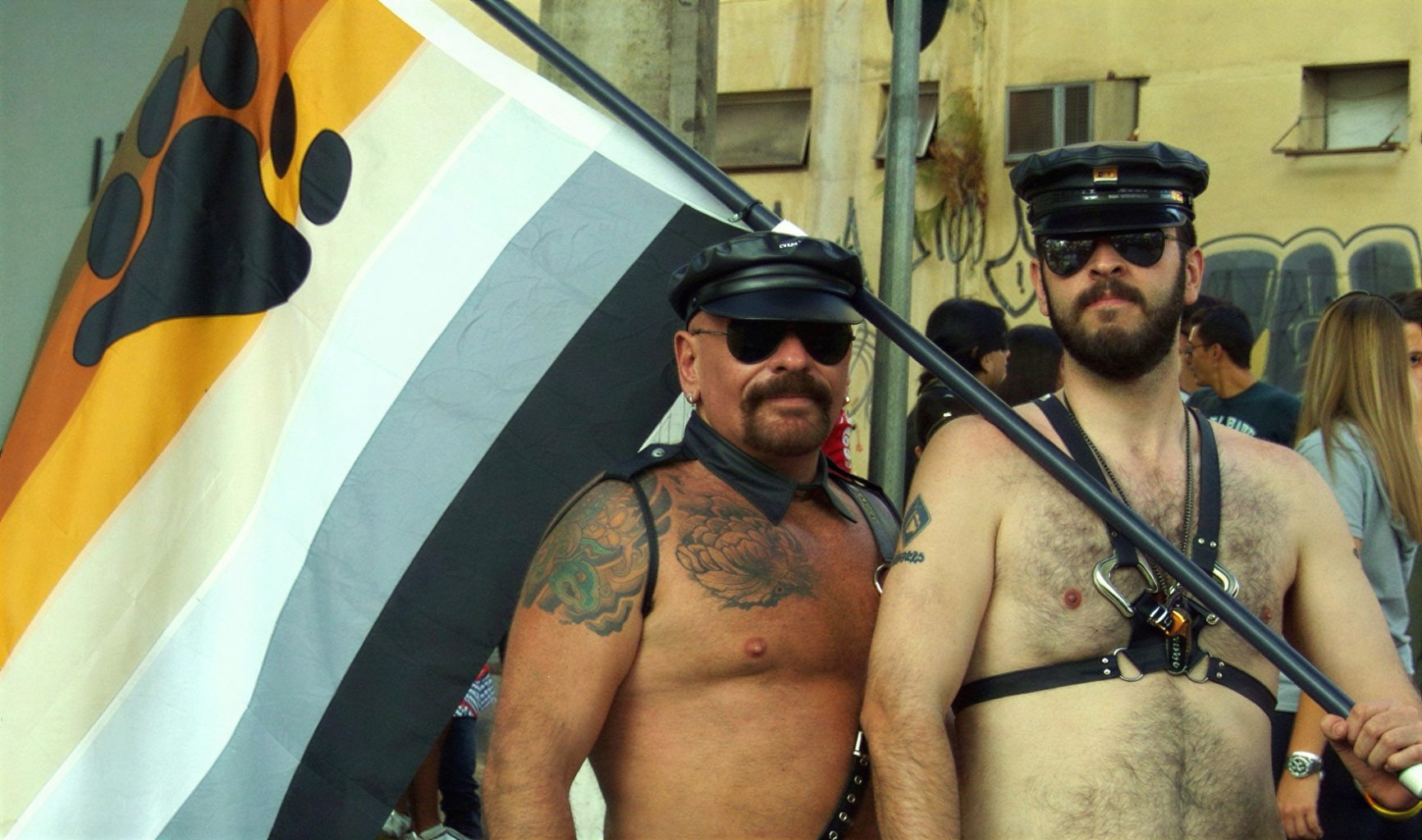
Colors: earthy brown stood for the ground where bears live. Early flags featured a golden-yellow paw print symbolizing the sun and a blue stripe for the sky. White, brown, and black represented the different bear species.
Later, in the mid-nineties, the first truly international bear symbol emerged: the International Bear Brotherhood Flag, credited to Bear Manufacturing. Its shades range from white through black in earthy brown tones, symbolizing the fur colors and nationalities of bears worldwide.